
As part of my son’s nightly homework, they are required to review the material they learned in class that day. Recently, my husband suggested that he teach it to his younger brother. He explained to my son that you might know something, but being able to teach it to someone else is a higher level of understanding.
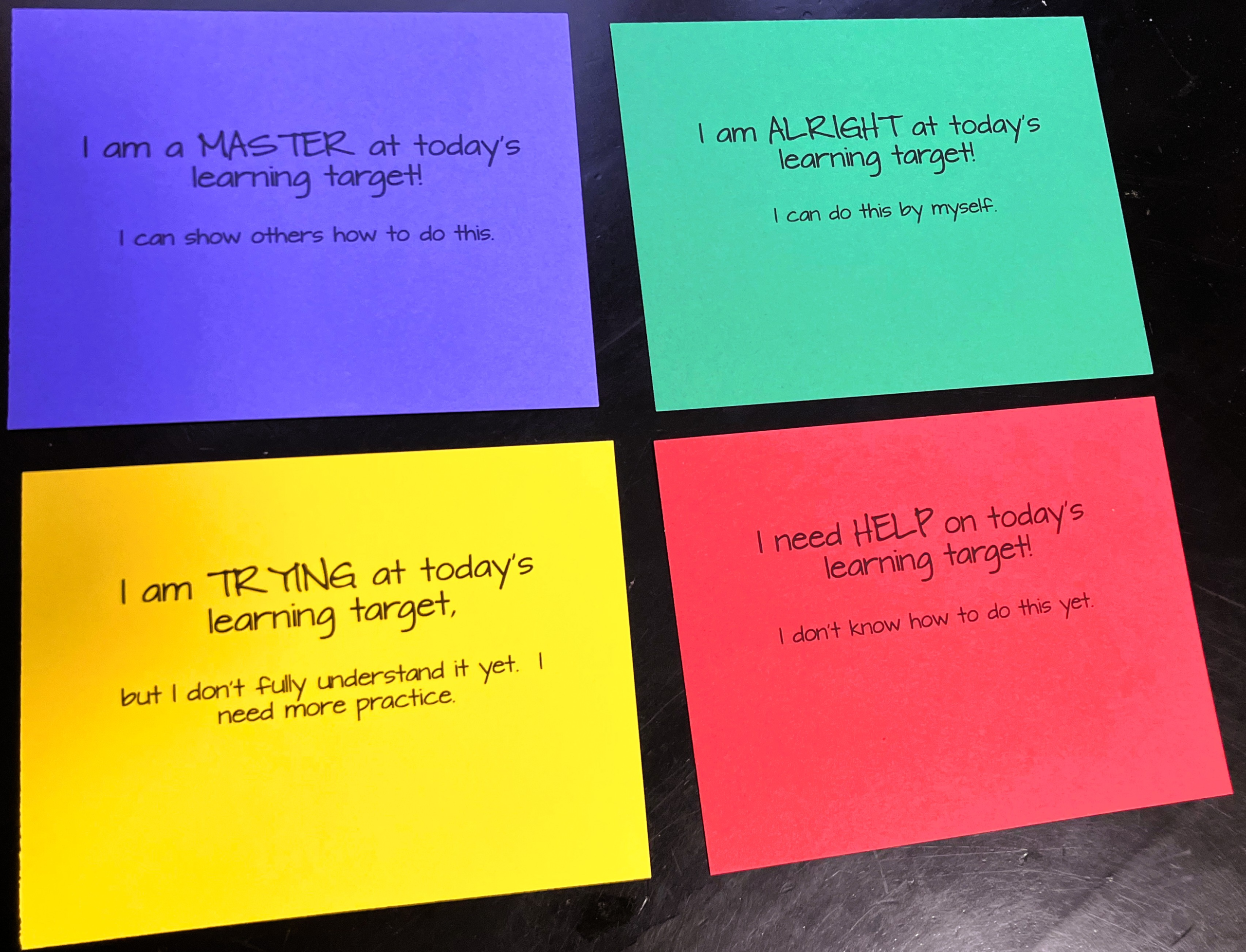
This reminded me of the way I have my students self-assess. Based on the Marzano Self-Assessment Scale, I came up with acronym MATH:
- Master – I can show others how to do this!
- Alright – I can do this by myself!
- Trying – I’m trying but I don’t fully understand it yet. I need more practice.
- Help! – I don’t know how to do this yet.
I use this with my students in a few different ways. In each of my classes, students are given a list of learning targets along with the schedule of lessons and assignments at the beginning of each unit. This is to help them be aware of what it is they are expected to know but also help them manage their time (a life skill that is great to learn in high school). I also explain that this is their SELF assessment not necessarily what I see of what they know. At first students often think that they need to get to Master level, but I explain to them that Alright is, in fact, alright. If you make it that level, you should be able to do all that is required of you, even if you can’t explain it to someone else. The challenge comes when a student understands but can’t perform the required skill, but knowing that is also helpful.
One of the most obvious ways I use this scale is with folders I set up by the door of my classroom.
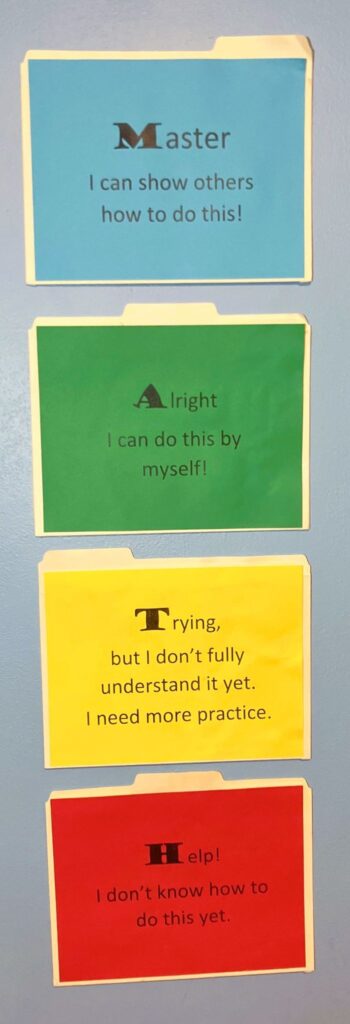
These were simply made by taping manilla folders shut and gluing the color coded level on the front printed on Astrobights paper. I usually use these for self assessment on bell ringers or warm up, or for students to turn in their “ticket out” of class. These are usually 2-5 problems and take about 5 minutes. After they are done, I tell my students to put their sheets in the “MATH” folders. I don’t do this every day, just periodically when I want more formative assessment, both for me and the students, and can adjust instruction accordingly.
At the beginning of the year I give my students self-assessment cards. These are just cards that I print on cardstock, again color-coded. For classes that use an interactive notebook, I have them keep them in an envelope in the front of their notebooks. I usually have them hold up the cards at the end of a lesson and tell them to rate themselves on today’s learning target, which is posted on the wall. Sometimes I’ll ask a more specific question. It’s a great way to quickly visually check for understanding since the cards are color coded. Again, I only use this periodically.
In Algebra 1 where I use interactive notebooks, students have all of the learning targets for the unit on a divider tab at the beginning of the unit and there is a place for self assessment there.
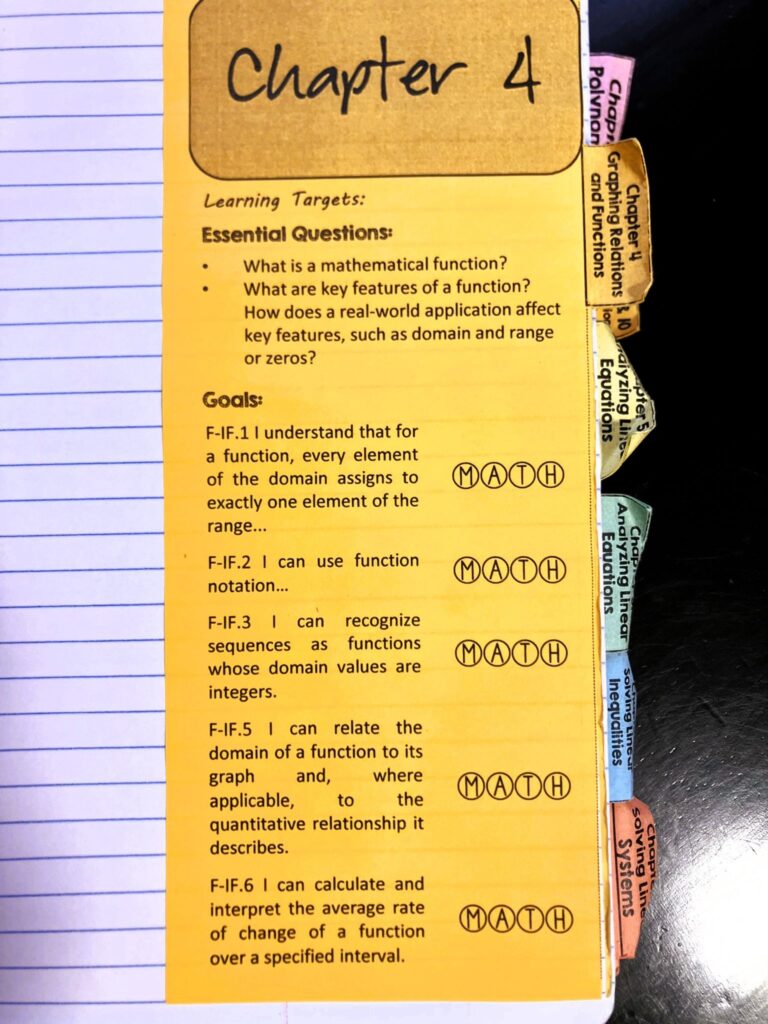
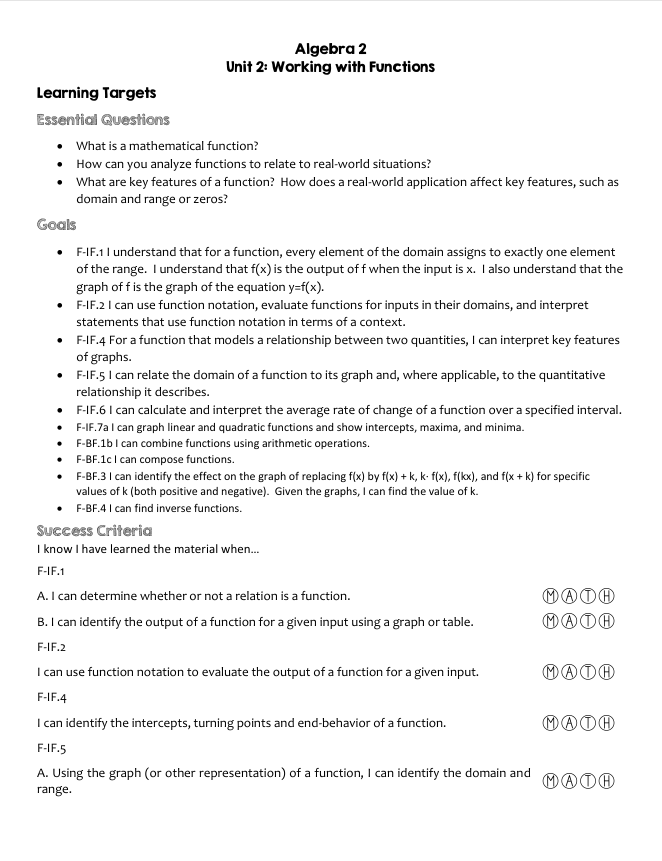
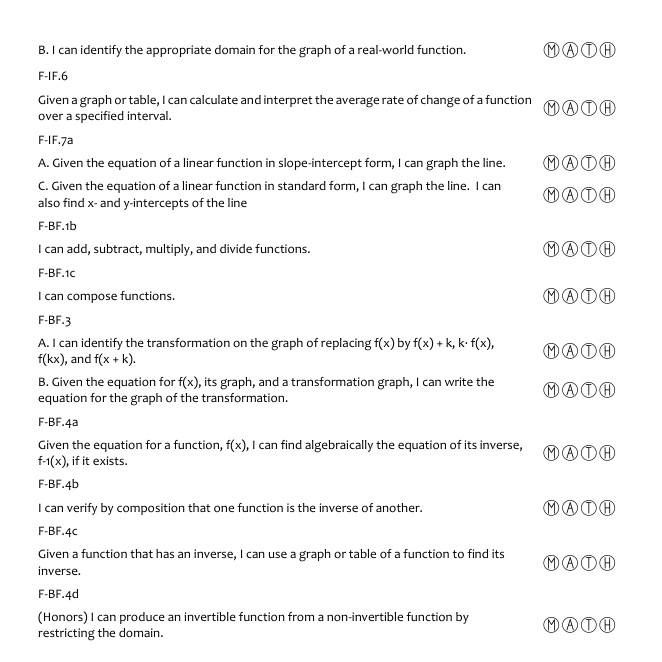
These are just the common core state standards for the unit. Then for each page/lesson they are given the success criteria and a space to self-assess at the end of the lesson.
A free template for the interactive notebook divider tabs is in my free resource library available to e-mail subscribers.
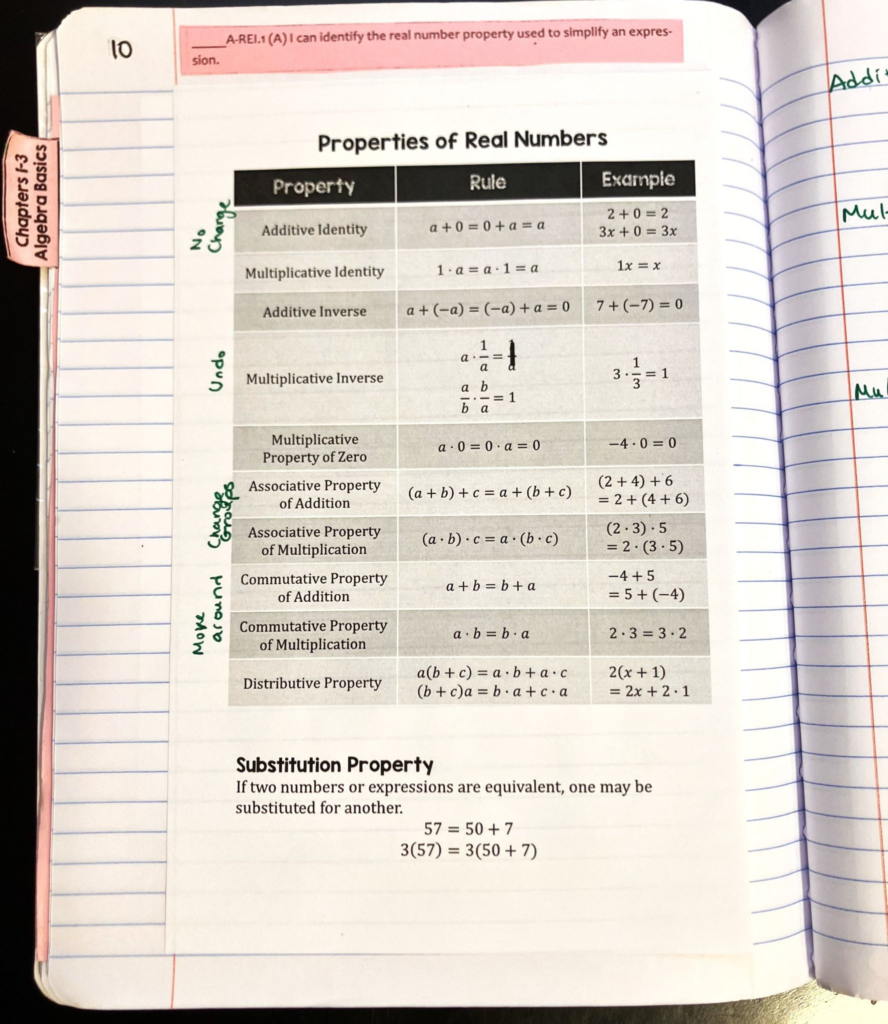
In my other classes, at the beginning of a unit, students are given all of the essential questions, standards, and success criteria with space to self-assess as we go throughout the unit.
I am not great at remembering to prompt my students to self assess. It waxes and wanes over the course of the year, usually better at the beginning of the year. When remembering to make it more habitual over the course of the year I do come back to it, but it’s always a goal of mine to make it more of a routine. I also tell my students in the beginning of the year as they get used to the way I use learning targets that they should be something they are referring back to in their own and not only when prompted by me. Self reflection as it relates to growth and achieving a goal is really a life skill that I want to impart to my students, but I could do better. How do you have students self-assess in your classes?