
I thought I had MASTERED using learning targets in my classroom. They were standards-based and written in student friendly language, but were they actually learning targets?
I had posters and checklists. I made sure my assessments were aligned to the learning targets, both formative and summative. Or at least I thought what I was using were learning targets
And then in the spring of 2017 I attended the Wisconsin Mathematics Council conference. One of the sessions was titled “Making Your Learning Targets More than Just Wallpaper.” Even though I thought my students were engaging with the learning targets, I decided to attend this session, not thinking I would learn too much that I didn’t already know. I figured I would brush up a little, instead, attending this session changed everything.
I wish I could give credit to the presenter, but unfortunately I forgot to write that down in my notes. If anyone was in Green Lake for the conference and remembers, please help me give credit where credit is due. Comment down below.
What is a Learning Target?
I’ll tell you what it’s not. It is not a learning objective. An objective is what the teacher wants the student to learn. It is also not simply the objective written in student-friendly “I can” format (though that may be part of it).
A learning target is what the student is supposed to be learning. How is that different? The goal of a learning target is for the student to be a self-regulated learner. While this does not mean that the students can do whatever they want in the classroom, it puts the responsibility on the student. The teacher cannot make their students learn. We can inspire, facilitate, and lead.
A Learning Target has two important components:
- Main idea describing important understandings
- Set of success criteria
- Procedural
- Analytical
Strong LTs have both
During the session, the book Learning Targets: Helping Students Aim for Understanding in Today’s Lesson was referenced. Side note: apparently Amazon knows me pedagogically since the other two books recommended to purchase with this are two of my favorites.
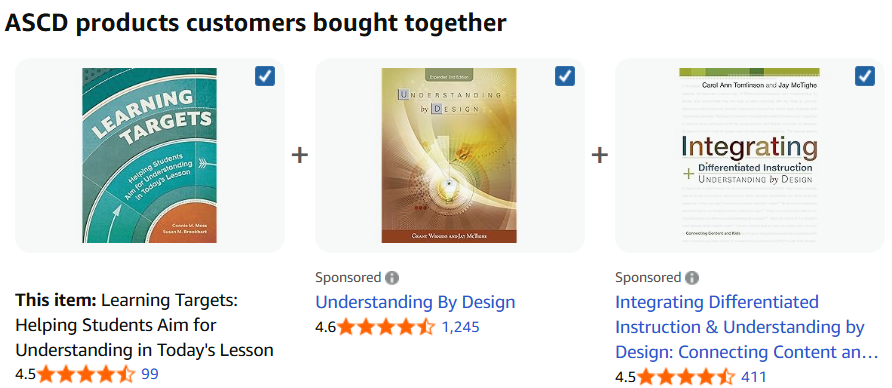
From reading Moss and Brookhart’s work, I deduced that a learning target is most effective if it contains three parts:
- Essential Question
- Goal
- Success Criteria
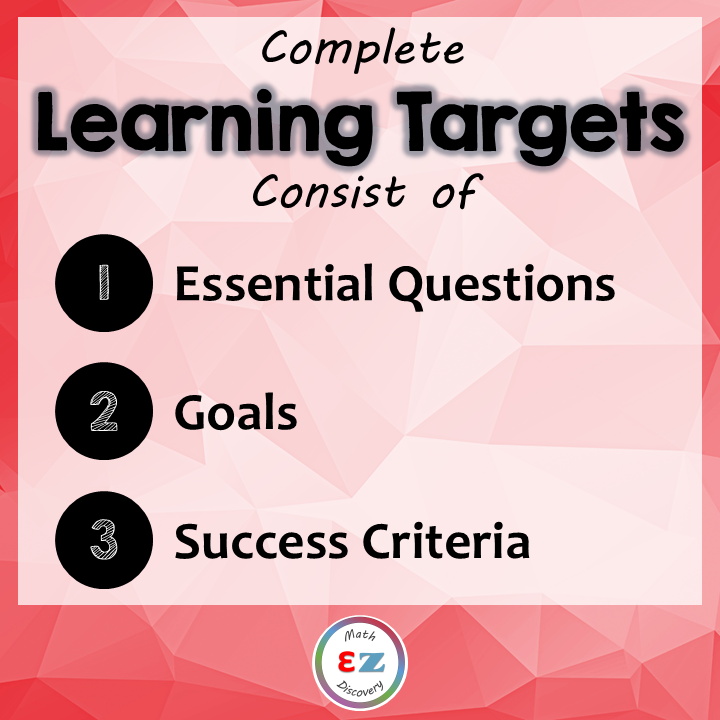
This was all completely new to me. I was basically just rewording and breaking down the standard. While using student-friendly language is an important part of a learning target it is not the entirety of one. In order for students to make and track their progress they need to have all three components.
Essential Questions
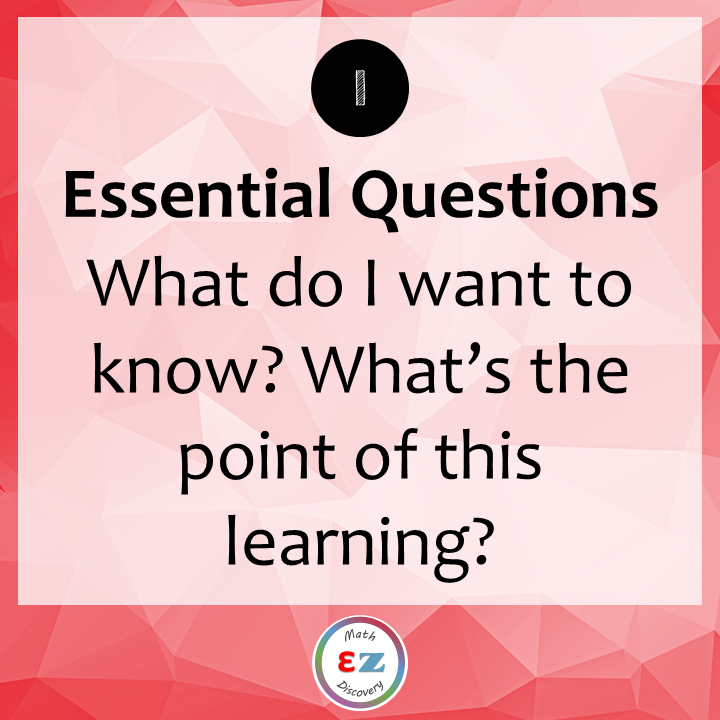
Students need to know why they are learning what they are learning. The essential question may not answer the age old question of “when am I ever going to use this?” But it does provide more opportunities for student buy-in and engagement. Real learning takes place when we build curiosity in our students.
The best way (though not always practical) is to preview an essential question for students to heighten their interest to invest in their learning. If this happens organically, even better. If you can engage students’ curiosity and questioning as it leads into the next topic, students are even more motivated to learn.
Goal
These are the main ideas, objectives, or standards that we expect students to master. These standards might be the starting point for developing the full learning target but they should not be where we stop. Think of them like the skeleton to be built up. Students need to know the goals but without the why and the how they are difficult to achieve.
Success Criteria
How do you know if you’ve met your goal? One of the things that sets learning targets apart simply from a standard or objective is the criteria for success-a concrete definition of meeting the goal. If students don’t know how to measure success at reaching the goal it is unclear to them whether or not they have met the goal.
This part is the most daunting task for teachers to define. What skills do we actually want students to know and how will we know they’ve met them? I’ve spent years defining and revising to most adequately represent the success criteria necessary for students to learn in high school math curricula. If you are looking for an easy way to share learning targets with your students, I’ve shared my learning targets work in my Teacher Pay Teachers store to save you time.
A Learning Target Example from Start to Finish
Here’s an example of a learning target for a Triangle Congruence unit in Geometry.
Essential Question: How can we determine if polygons are congruent?
Goal: G-CO.8 I can explain how the criteria for triangle congruence (ASA, SAS, and SSS) follow from the definition of congruence in terms of rigid motions.
Success Criterion: I know I am successful if I can determine what corresponding parts must be congruent in order to determine whether the triangles are congruent.
Writing learning targets can be daunting but when done correctly they make the learning expectations clear for both ourselves as teachers, and more importantly our students. This does not need to be time-consuming (though it will take an initial investment in time at the beginning) and is a worthwhile endeavor.
When I get back into my classroom, I will post about the ways in which I share the learning targets with my students to make them meaningful.
Do you write your own learning targets? Do you use them effectively in your classroom?